2026
Ampera: sEMG-Adaptive Motorised Cable Trainer
Team of four · University of Auckland
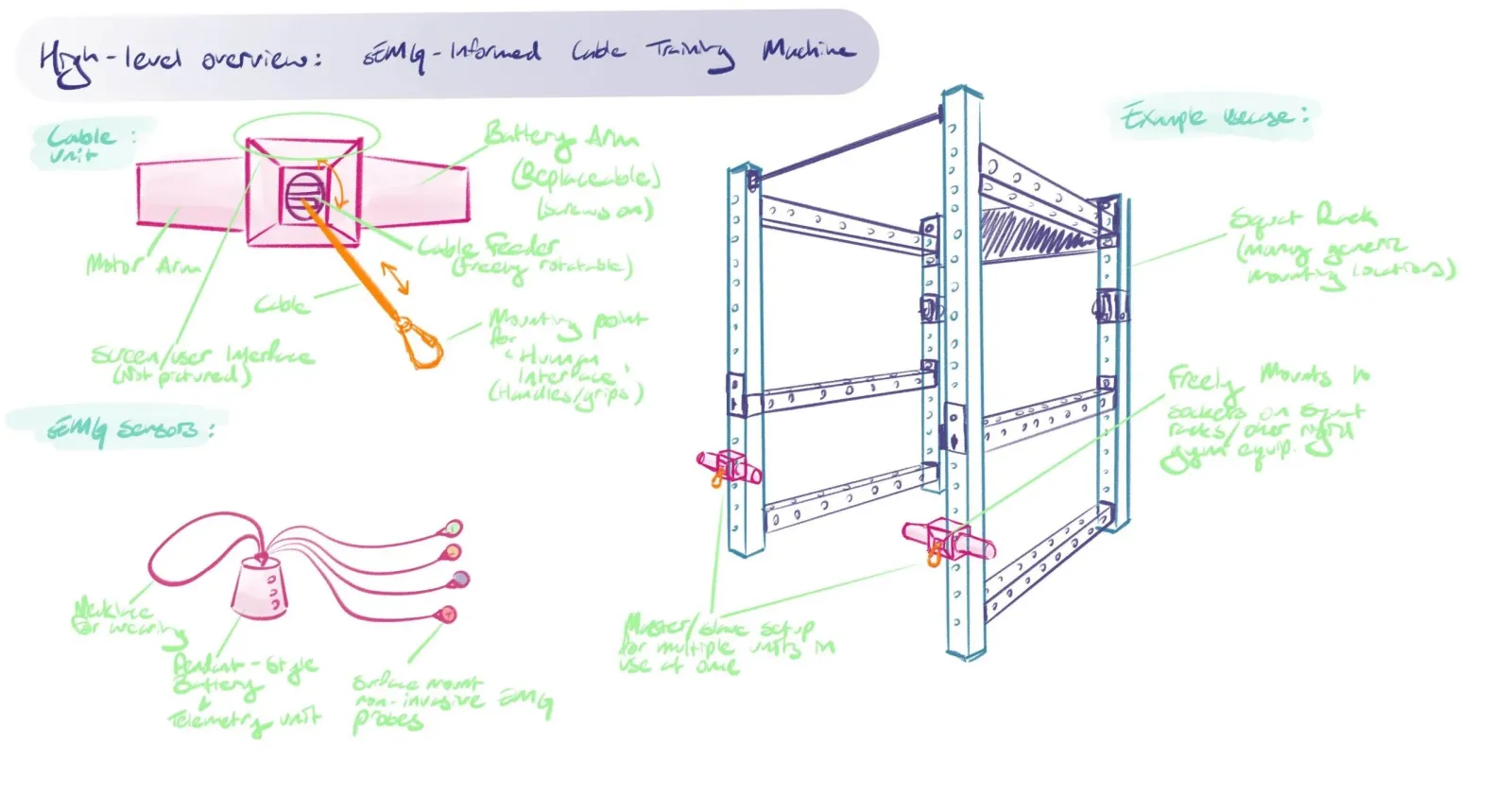
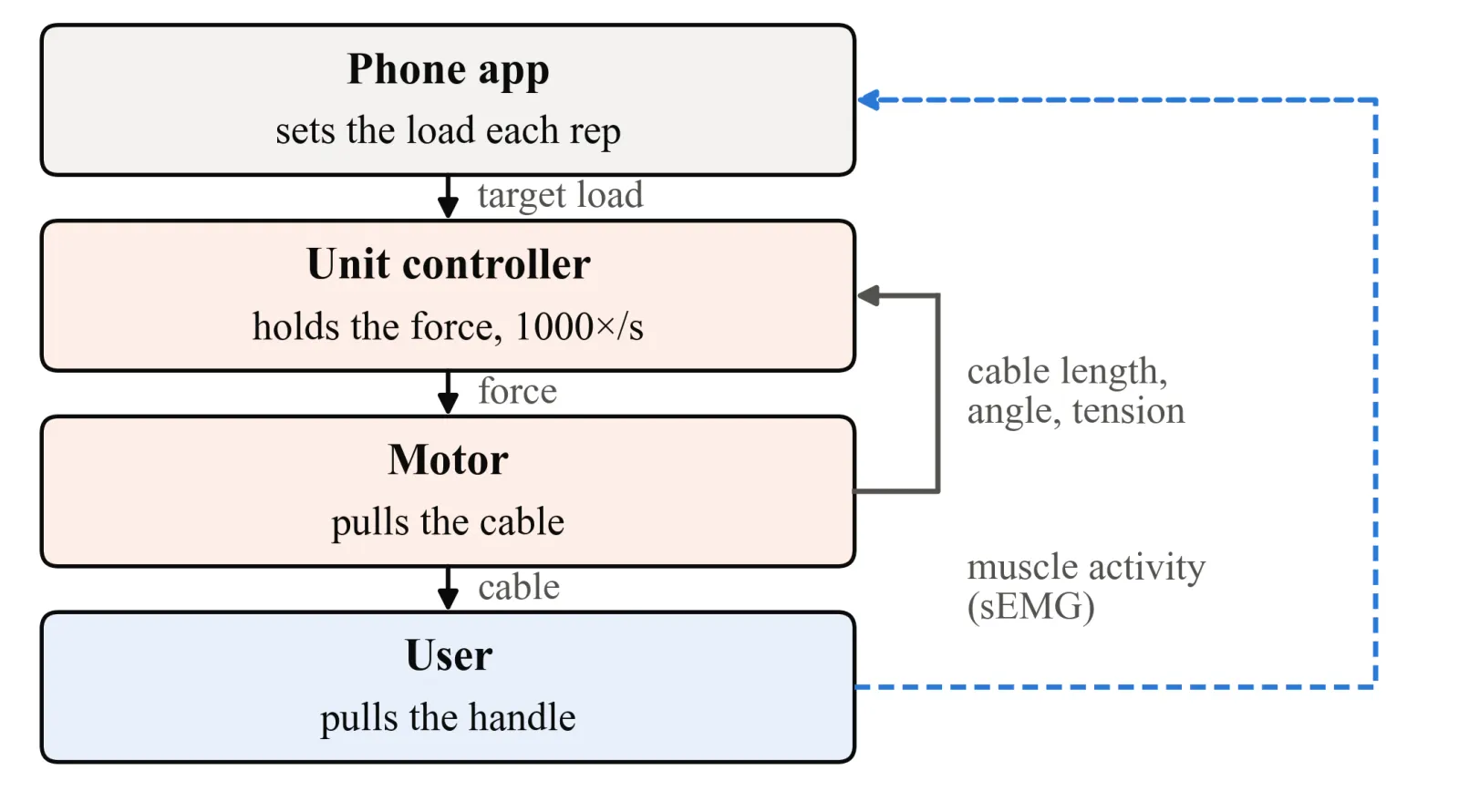
Ampera grew out of my own training in the gym, and out of following a dancer friend’s rehab journey. Cable machines apply a fixed load and give no sign of which muscles are actually doing the work. Ampera is a compact motorised cable unit that pins to any squat rack. It adjusts resistance each rep based on muscle activation, which it reads from wireless surface-EMG pods worn on the body.
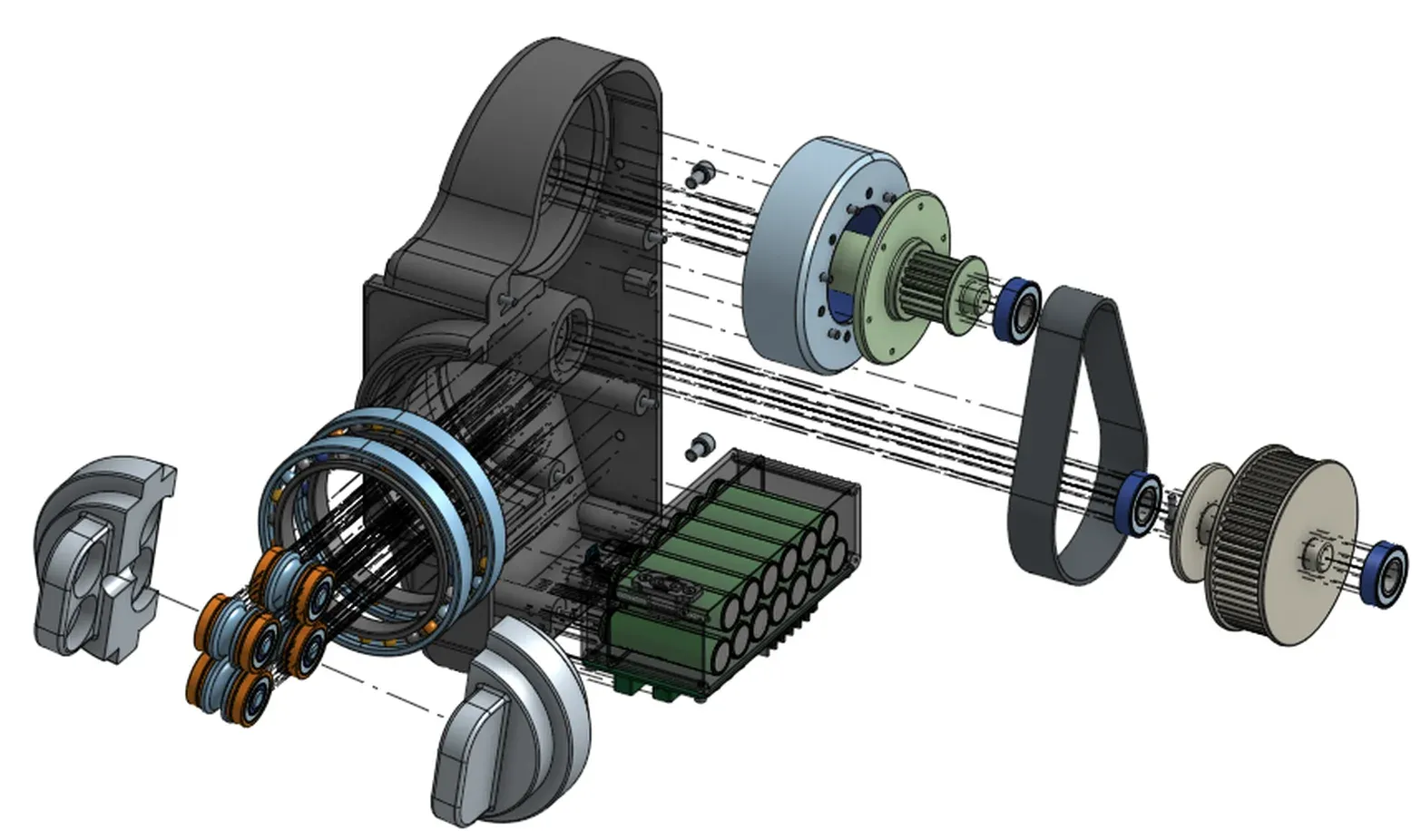
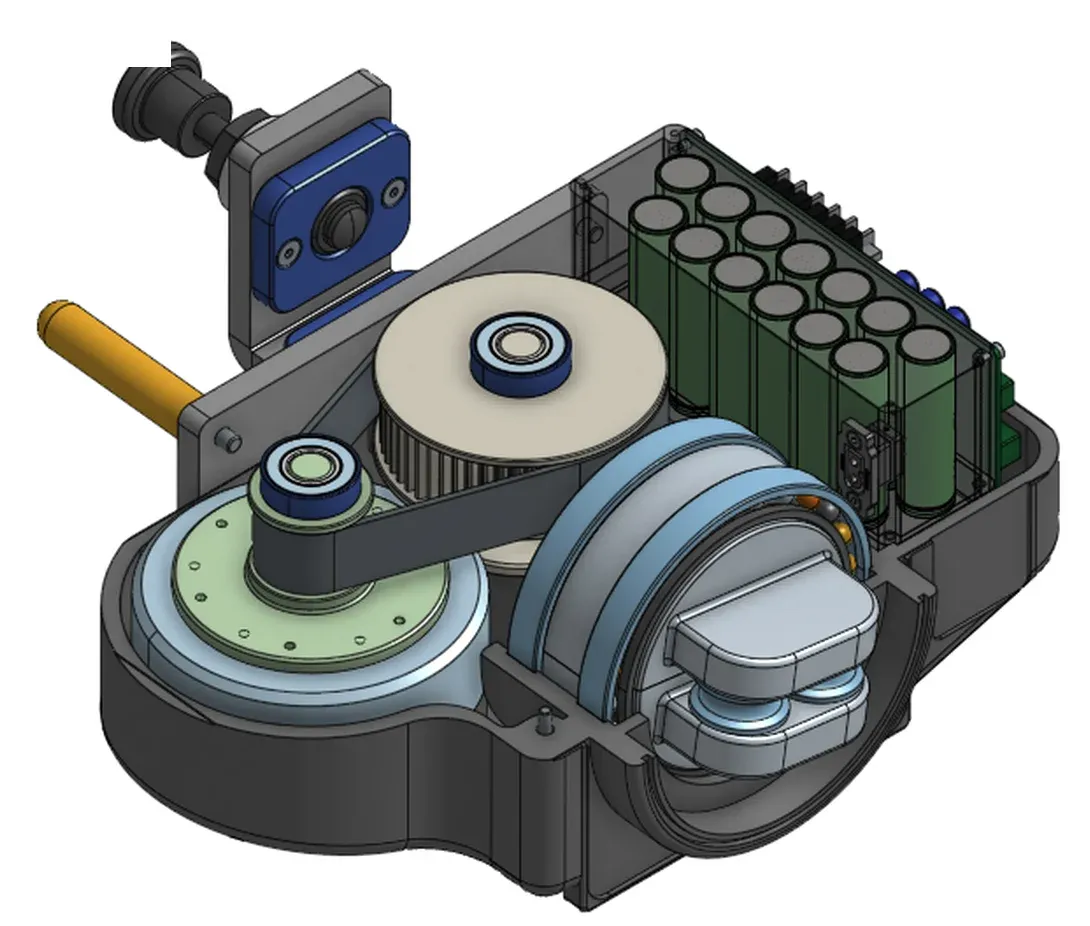
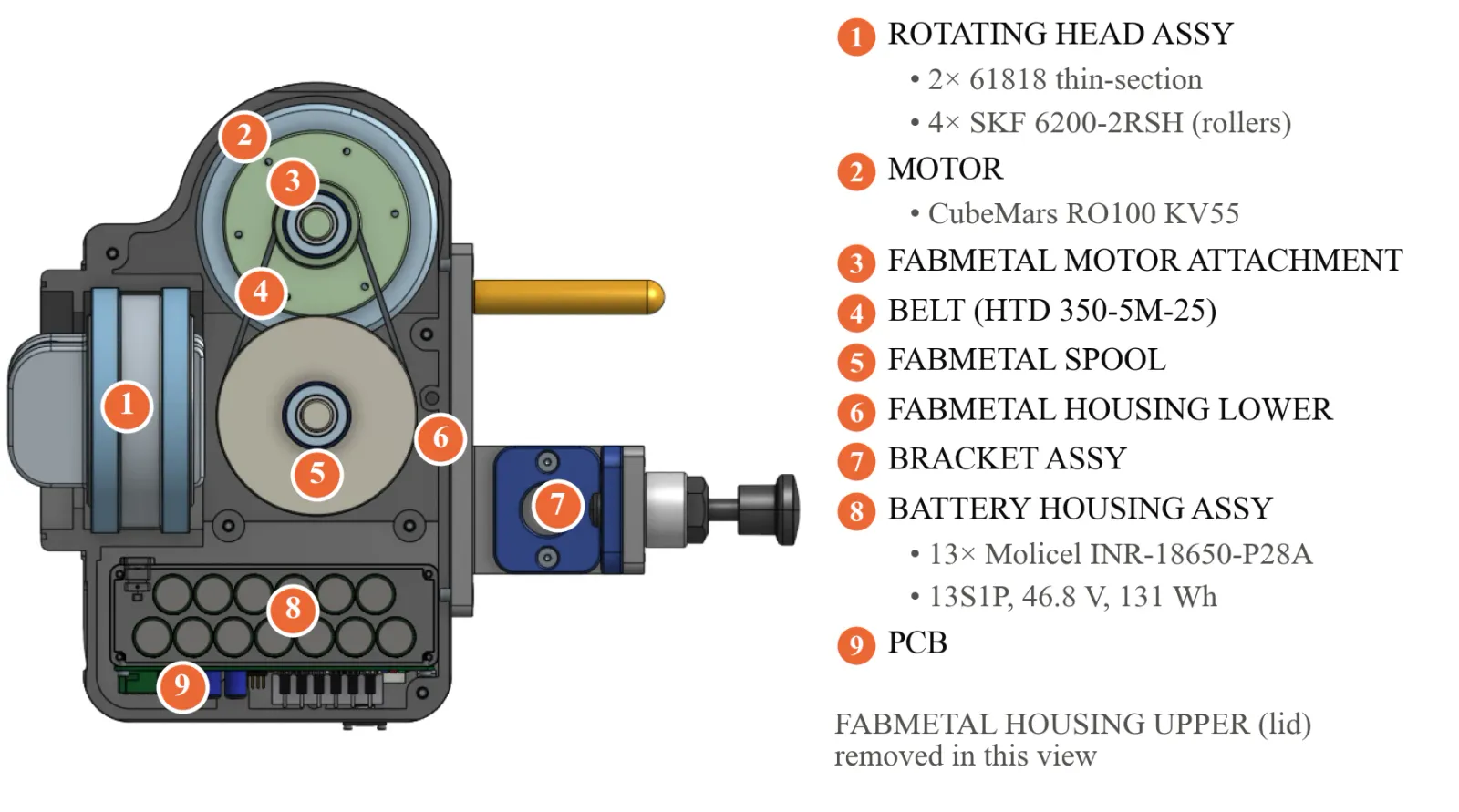
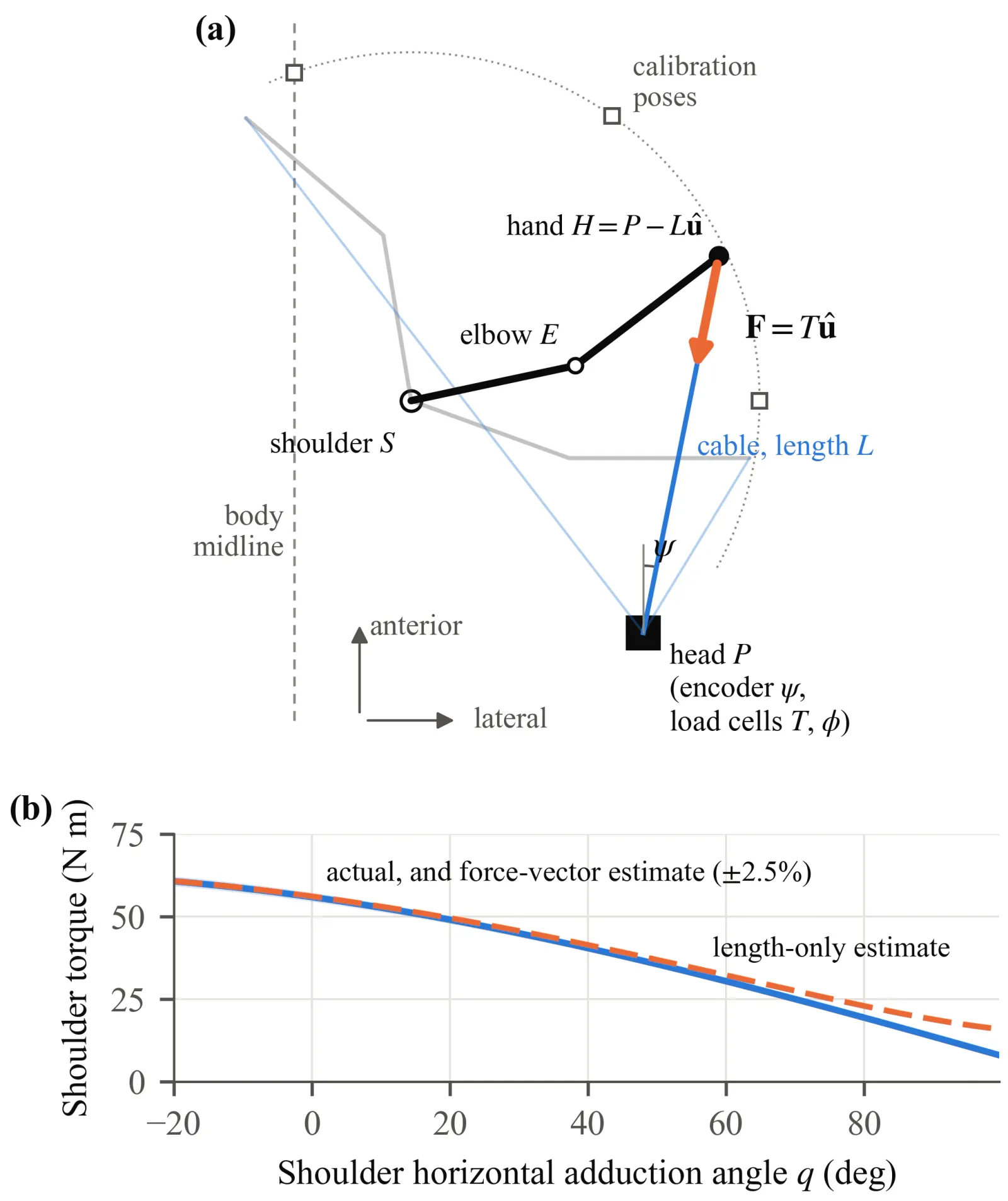
A frameless brushless motor drives a Dyneema rope spool through a 3:1 belt, giving up to 100 kg of tension. A swivelling head with an encoder and a two-axis load cell measures the direction and force of the pull. From that, the unit estimates the user’s joint angles and shoulder torque from its own sensors. A pair of units on one rack forms a dual-cable station that can train each side to equal effort and track left-right asymmetry, for rehab and strength training.
My role: I led the concept, ran the end-user interview, and did the early mechanical design and analytical feasibility work. The interview shaped a new perturbation mode and joint-torque resistance profiles.